


What Is the Best Cadence for Cycling? Why Your Natural RPM Usually Wins
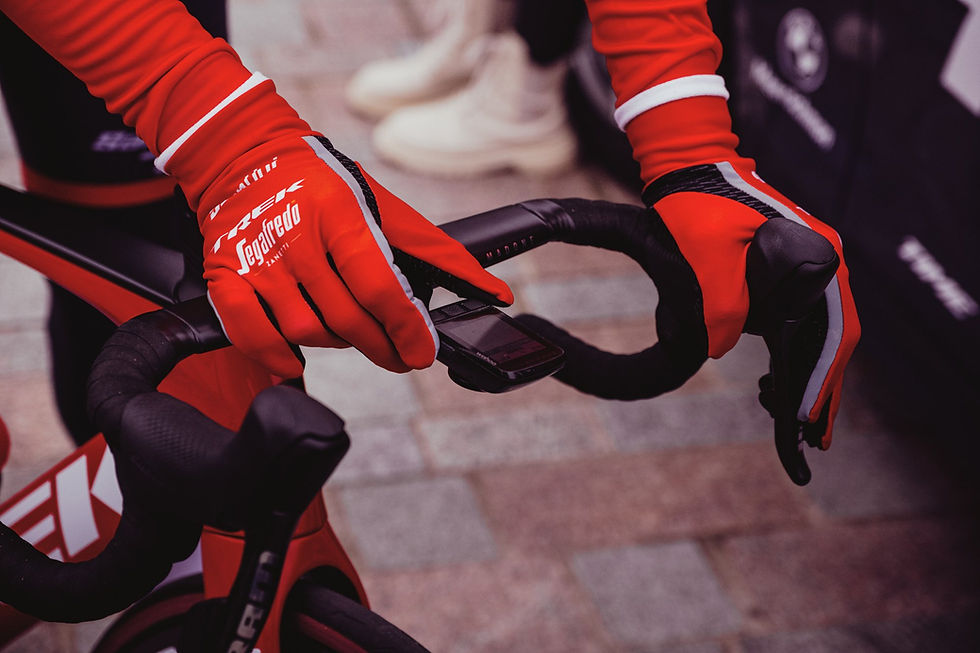
Cadence has become one of cycling’s most overcomplicated topics.
For most riders, it matters far less than they think.
Many cyclists have a fixed idea of the cadence they “should” ride at, and get frustrated when they miss it.
Endurance rides are spent forcing a higher RPM, which only drives up heart rate and piles on fatigue.
Interval sessions are sabotaged because so much effort goes into holding a supposedly “correct” number that the power targets get missed.
It’s especially common among the “numbers guys”: finance, tech and investing types, whose careers reward optimising every variable.
But the body doesn’t work like a spreadsheet.
Is there a best cadence for cycling?
No. There is no universal cadence formula.
Your body is an intelligent organism. When you ride, it naturally settles at the RPM where it produces power most efficiently.
That rhythm reflects your physiology, your strength characteristics and your neuromuscular coordination. Muscle fibre type seems to be a deciding factor.
For one rider, that might be around 80 rpm.
For another, it might be 95 rpm or higher.
It’s highly individual.
What forcing a “correct” cadence costs you
Deliberately riding well above or below your natural cadence increases the metabolic cost of every watt you produce.
Oxygen consumption and neuromuscular demand go up, gross efficiency goes down, and fatigue arrives sooner (Chavarren, 2009).
In other words, chasing a number that looks right on your head unit can make the same ride harder and the same interval slower.
The same trap applies to every metric on the screen. We wrote about it in Is Your Power Meter Holding You Back?.
When cadence does matter
There are specific times when cadence matters.
That’s in workouts deliberately designed to drive an adaptation by taking your RPM above or below its normal range:
High-cadence drills
Low-cadence torque work
Sprint and neuromuscular sessions
High-cadence work increases the firing frequency of motor neurons and forces faster coordination between opposing muscle groups (Dorel, 2009).
Once that adaptation arrives, the product is a cleaner, more efficient pedal stroke. With enough of it, your natural cadence can rise too.
The point is, you aren’t forcing it. It simply becomes your most efficient way of producing power.
And yes, there are outliers for whom cadence is a genuine limiter. That is something to address in specific sessions with a clear purpose, not something to agonise over in the background of every ride.
Used this way, cadence work is part of the training variety that keeps a trained body adapting.
Does low-cadence training build strength?
Cyclists have believed for years that big-gear, low-cadence work builds “strength”.
The research is mixed.
The best overall review we have, from Hansen and Rønnestad (2017), found no strong evidence that low-cadence training is superior to normal riding for improving strength or performance.
Some more recent, smaller studies do point to benefits. But their protocols differ from the traditional long 50 to 60 rpm “chugging” reps. They favour short, more explosive efforts.
And for boosting performance, heavy strength training in the gym has convincingly outperformed low-cadence training.
Low cadence isn’t useless. It just isn’t as proven as people want it to be.
The bottom line
Stop forcing a cadence on endurance rides and intervals.
Let your body find its own rhythm. It’s usually the most efficient one.
Use cadence drills with intent, in specific sessions, when there’s a reason.
If you want strength, lift heavy in the gym rather than grinding big gears.
Relax. Turn the pedals. Hit the purpose of the session.
Your body will settle into its most efficient rhythm.
Want to know what’s genuinely holding your riding back? Book a free 30-minute consultation with a DUCHY coach.

Comments